
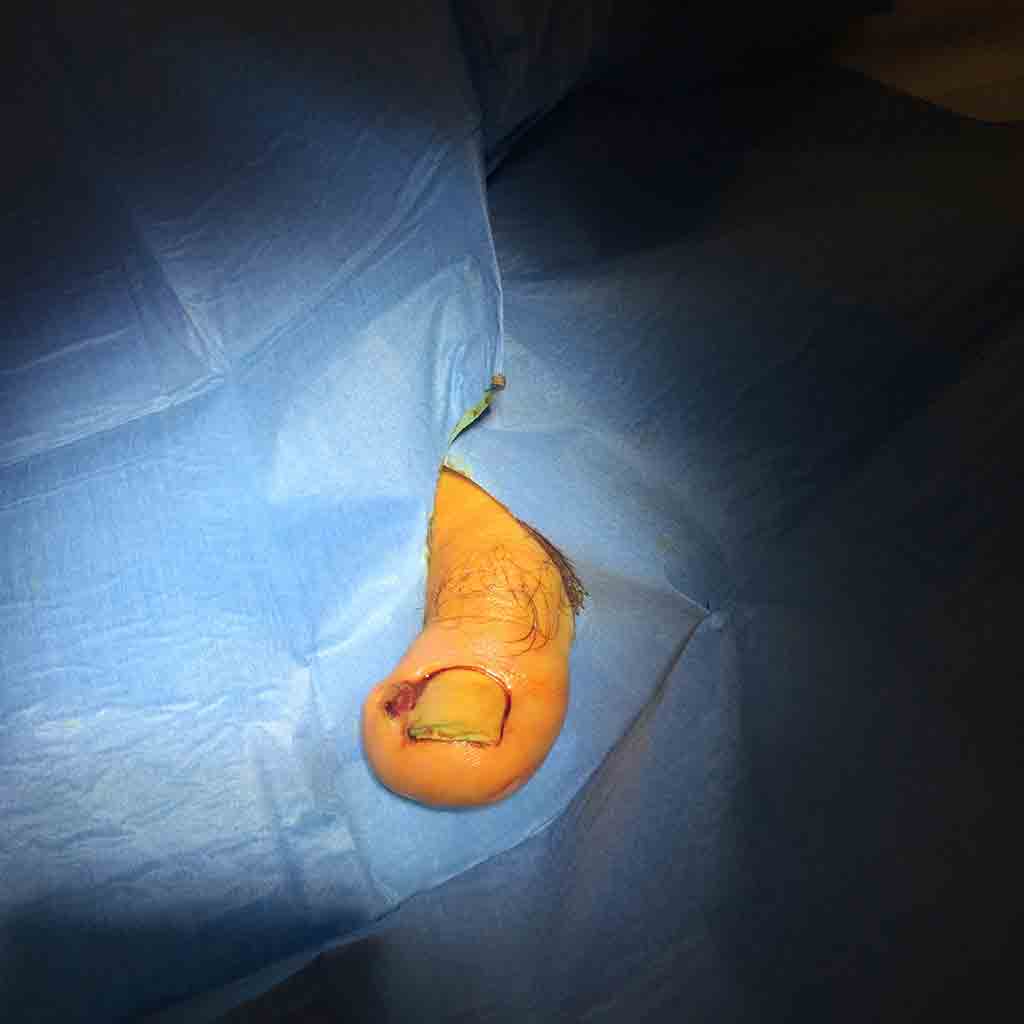
What is an ingrown toenail?
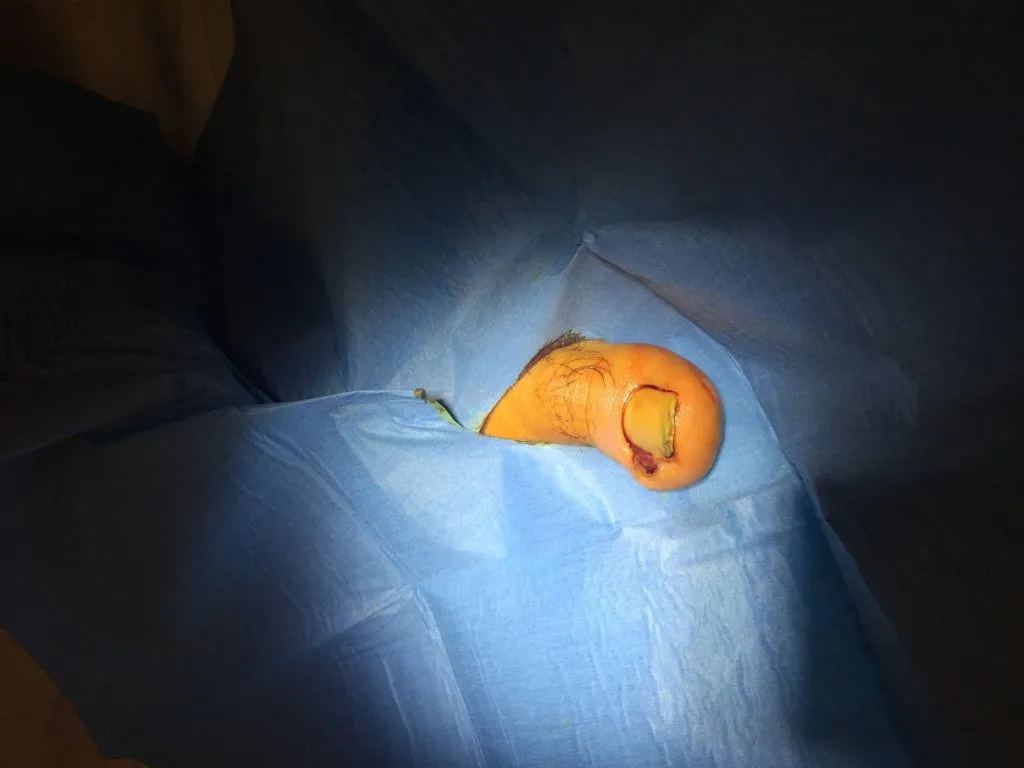

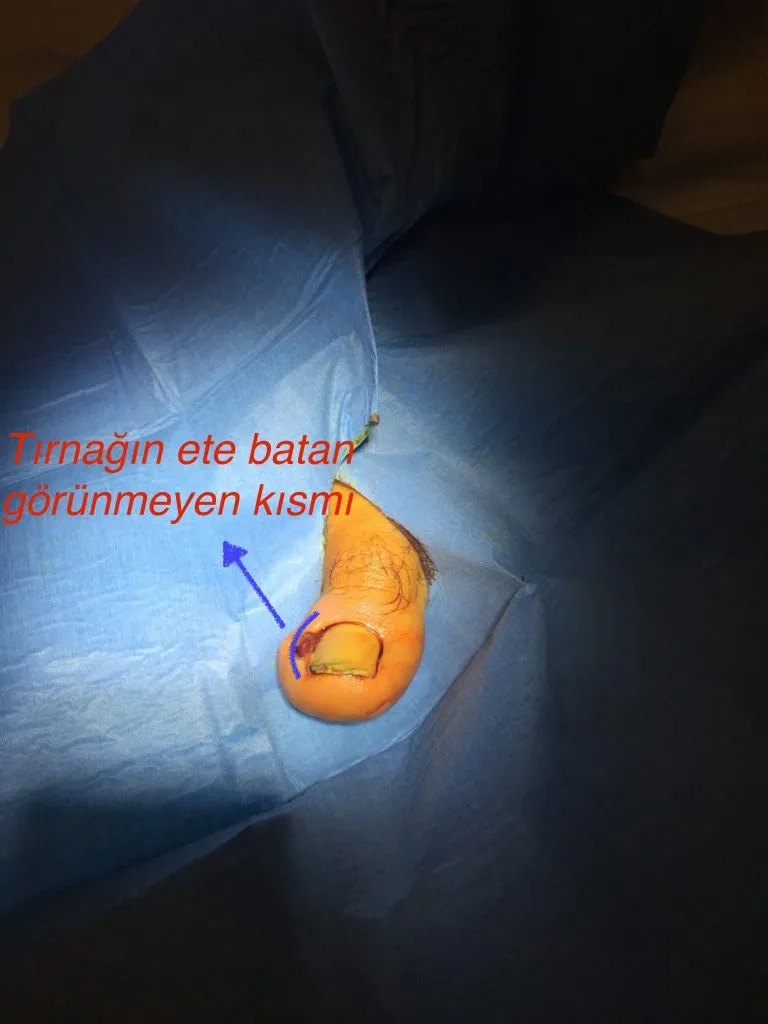
An ingrown toenail is the soft-tissue damage caused when the nail, for various reasons, grows into the surrounding skin and digs into it. Because the foot carries a dense bacterial flora and is kept in a closed, moist environment, this soft-tissue damage is frequently followed by infection.
Less commonly, ingrown nails can also affect toes other than the big toe.
What are the symptoms of an ingrown toenail?
Swelling, pain and redness where the side edges of the nail meet the skin of the toe. If an infection has developed, there may be discharge.


Who gets ingrown toenails?
- People who wear tight shoes
- People whose jobs involve wearing shoes for long hours (soldiers, police officers, etc.)
- People whose nails tend to grow inward
- People with nail bed damage
- People who leave a sharp corner at the side of the nail when trimming it
Ingrown Toenail Treatment
- To prevent it, avoid cutting sharp angles at the corners when trimming your nails, and avoid wearing tight shoes.
- If the nail is starting to grow in at an early stage, the part digging into the skin can be trimmed away and a soft material can be placed under the nail to lift it.
- If a fully ingrown toenail has developed, nail bed revision is required.
Surgical Treatment of Ingrown Toenails
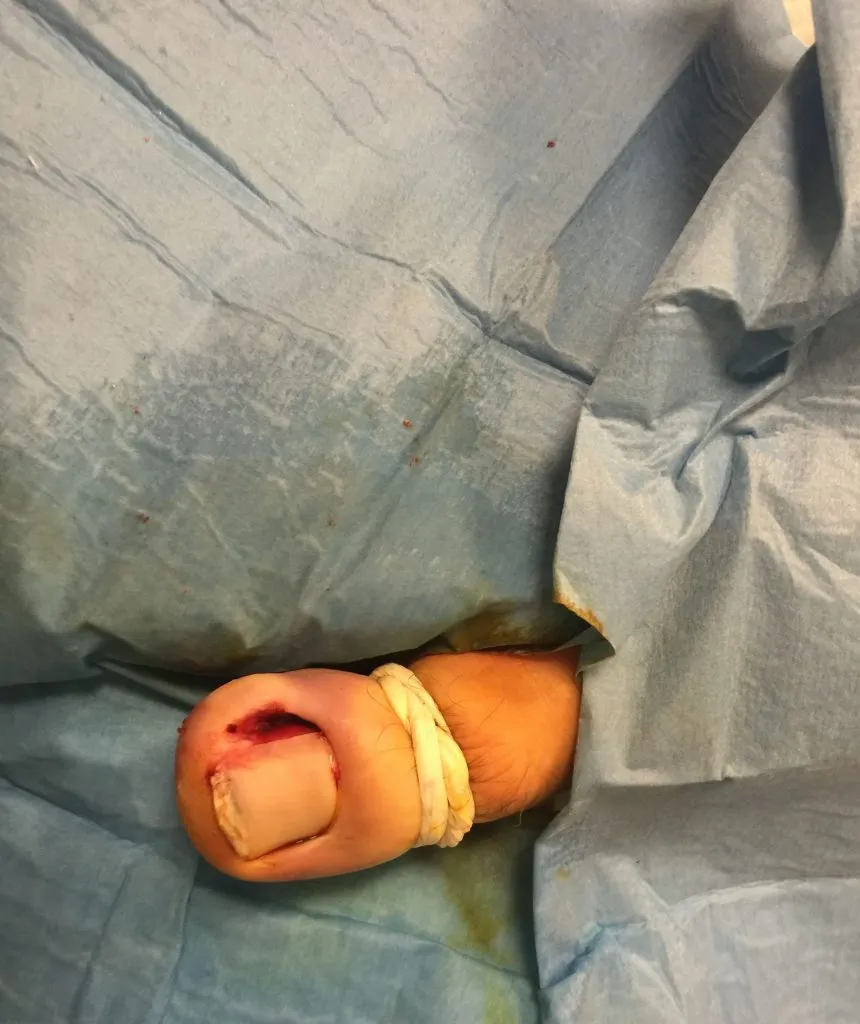
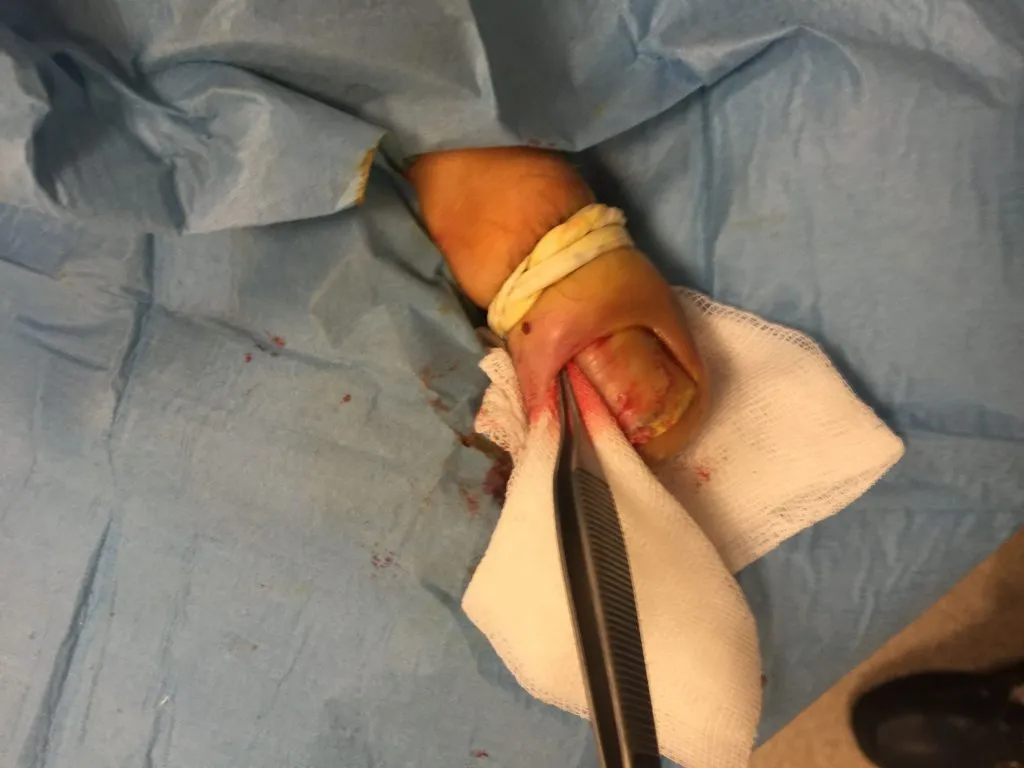
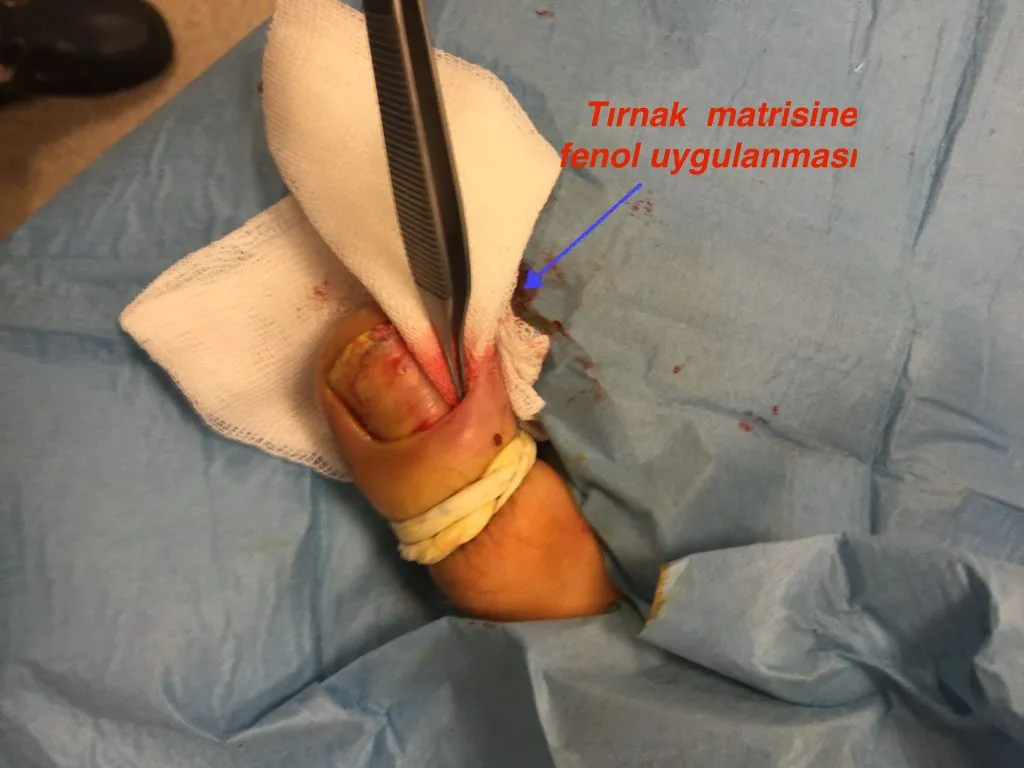
The toe is completely numbed with local anesthesia, and an elastic tourniquet is applied at the base of the toe to prevent bleeding. The ingrown part is removed, and after a 2-3 mm strip of the nail is excised, the group of cells (nail matrix) that produces that part of the nail is destroyed so that the nail does not grow back from that area.
Results are generally very satisfying, although recurrence can occur in a small percentage of cases.